
AT Interiorpanels makes custom acoustic wall finishes, across four product lines, from acoustic panels to wallcovering and trims, each with its own fabrics, sizes and options. It's a small company with a small team. Two salespeople are often standing with the customer, with a laptop or tablet, putting a wall together. Behind them work a buyer and the people on the production floor. No large IT department, but a working day where everything has to add up and keep moving.
The challenge
A salesperson assembles a product and has to attach a correct price to it on the spot. That price lived in separate spreadsheets, four of them, one per product line, and was put together by hand. Which works while it's quiet. But the moment a customer asks "and what does it cost with that option added?", the sums start over, and every change is another chance for a slip. The salesperson calculates in one screen, notes it in another, and the customer waits.
On top of that, the rest of the process stood apart. The quote, the purchasing of materials and the job going to the floor lived in mail, folders and spreadsheets. Anyone who wanted to know what had been agreed on an order had to piece it together. And a price you agree today, you want to be able to see again two months later, even if material prices have moved in the meantime.
The approach
We're building one internal system where all of that comes together: a CRM as a Power Apps Code App, with the quote calculation as its commercial heart. The salesperson picks a product, toggles options on and off, and watches the sales price move with it. No waiting, no second screen, no maths on the side. It calculates entirely on the device itself, laptop or tablet, so it stays smooth even at the customer's table.
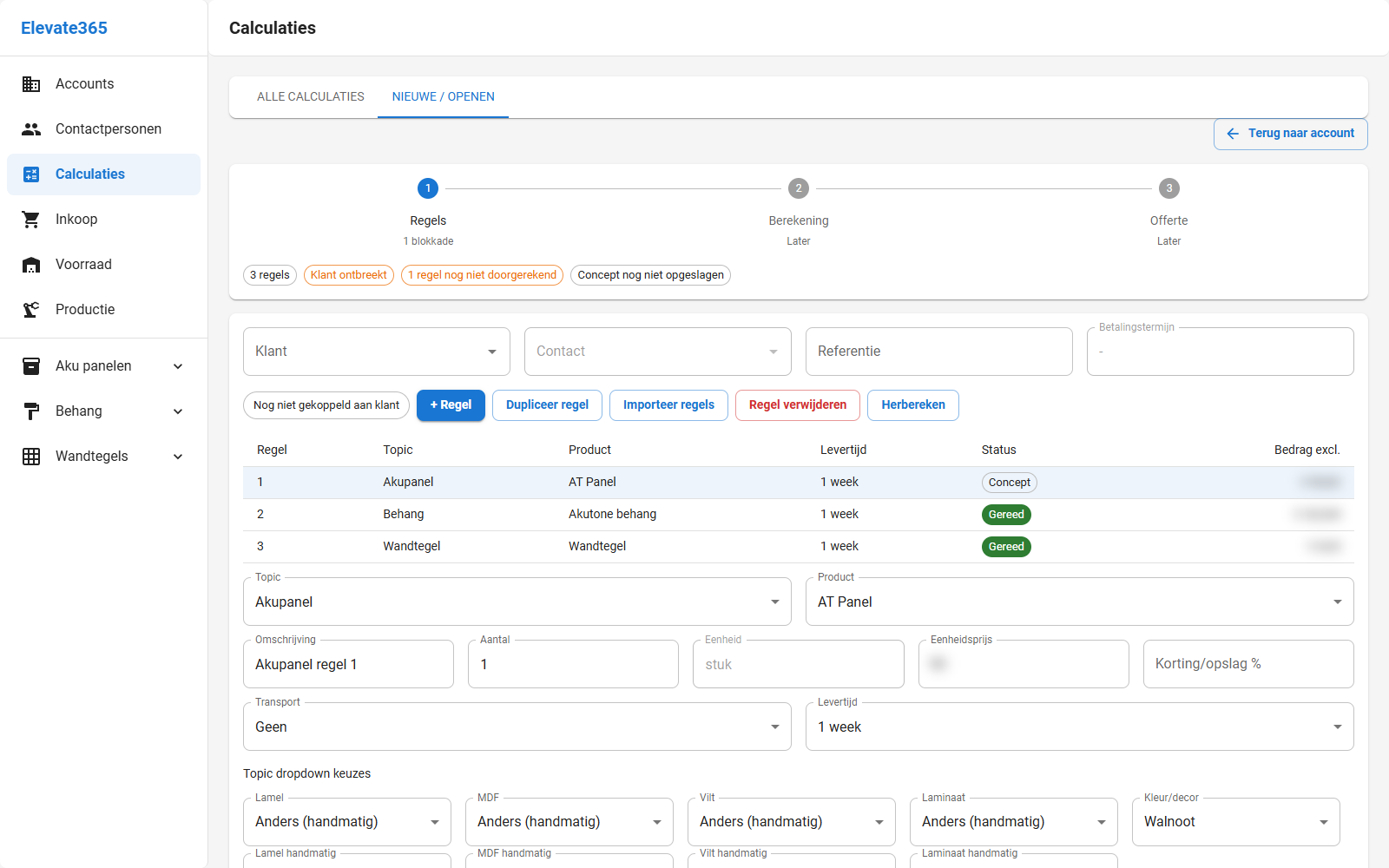
Around that core sit the customers, contacts and quotes, and further out the operation: purchasing, stock and production, plus the drawings and photos per customer in one place. All four product lines run through the same calculation core, so prices and options are maintained in one place instead of in four separate sheets.
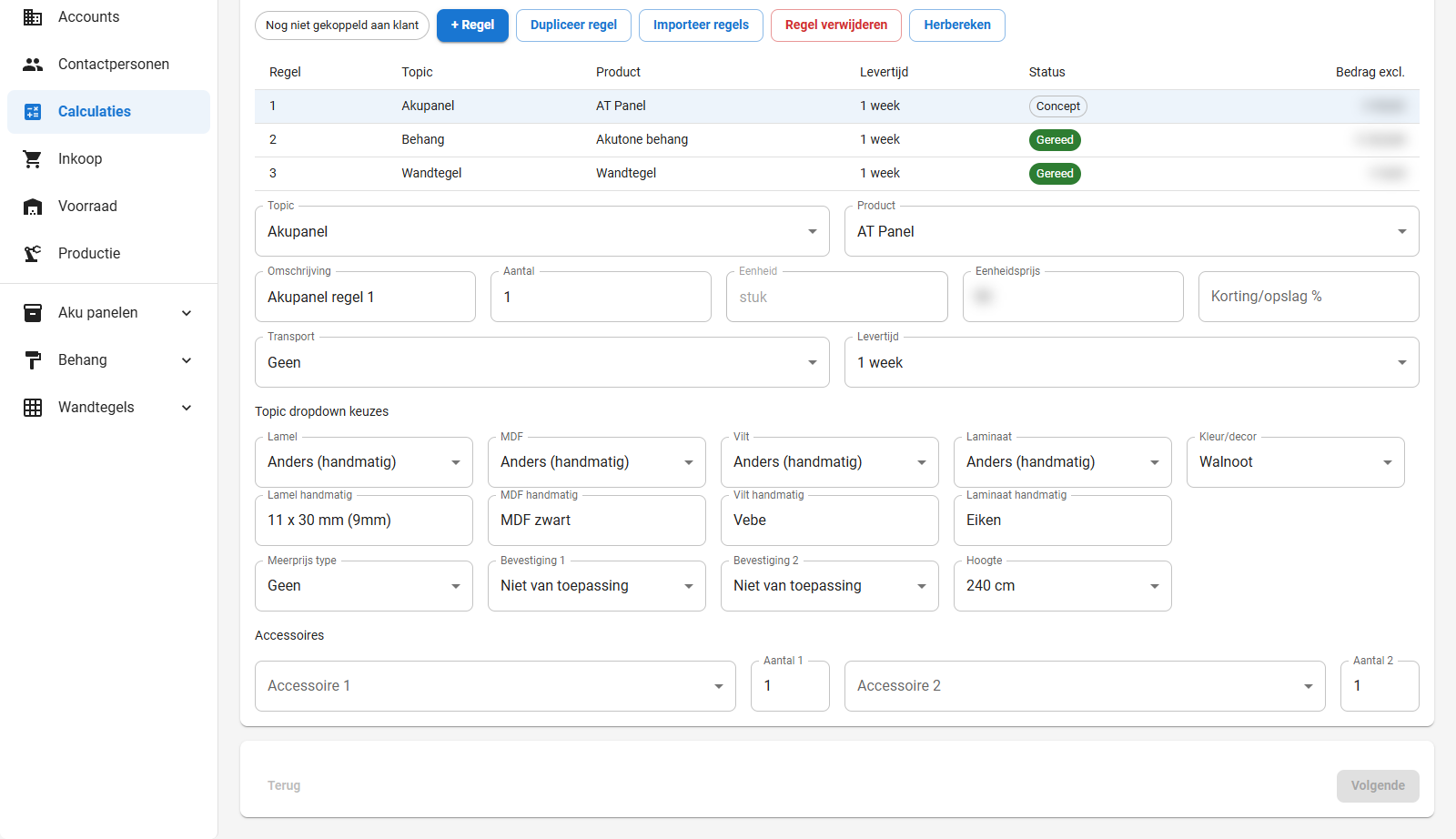
Two choices matter in practice. The moment a quote becomes an order, we lock the calculation as a snapshot; if the rates change afterwards, the order still shows what was agreed. And whether a customer is business or consumer automatically sets the right price, so the salesperson can't forget which tier applies. A sent quote goes to the customer automatically as a PDF.
We're building it in phases. First the path sales walks every day, from configuration to quote. Then the operational tail, so a confirmed order rolls on to purchasing and production by itself. That way the system delivers value from the moment the first quote can go out, not only once everything is finished. This is an ongoing project: over the next two years we are building it out step by step into a full system covering everything described above, from calculation and quoting to purchasing, stock and production.
The result
The aim is a straight line from product choice to a correct quote, without doing the maths on the side, with the customer watching it happen live. One system instead of four spreadsheets and a pile of mail: customer, quote, order, purchasing, production and files together. An order is fixed as agreed and can be seen back exactly later. And a confirmed order rolls on to the floor, so sales and production work from the same source.
For the team, it mostly means the calculation moves into the background. The salesperson has time left for the conversation with the customer.